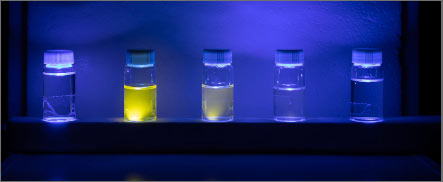
Fluorescent tracer agents coupled with transdermal detection technology enable physiological monitoring.
More >>
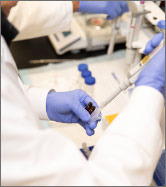
Bright fluorescent agents designed not to interact with the body are sensed through the skin.
More >>
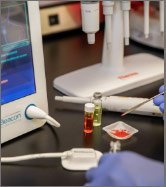
New clinical applications for fluorescent tracer agent-based systems are in development.
More >>
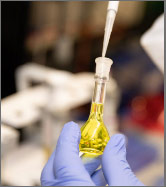
Clinical and preclinical studies are underway to advance the use of fluorescence to measure and monitor disease progression.
More >>
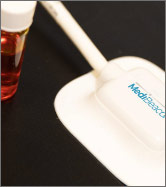
Composition of matter, device, algorithm, process and method patents in the US, Europe and globally.
More >>


Leading academic centers, research institutes, contract research organizations and pharmaceutical companies worldwide rely on MediBeacon technology.
More >>

Research using MediBeacon preclinical products is featured at scientific meetings worldwide.
More >>

In-depth preclinical content for researchers.
Complete a form to gain access.
More >>

Fluorescent agents engineered to not interact with the body have the potential to enable measurement and monitoring of vital organ systems.
More >>
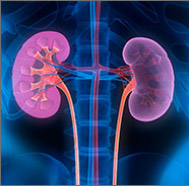
GFR is widely accepted as the best indicator of kidney function. A clinically practical and accurate point of care methodology holds promise.
More >>

Increased intestinal permeability is implicated in inflammatory bowel disease. Rapid assessment of gut barrier function is a focus.
More >>

Fluorescent agent angiography has the potential to aid in diagnosis and monitoring of vasculature leakage seen in Diabetic Retinopathy, Macular Degeneration and Retinal Vasculitis.
More >>

Intraoperative identification of ureter or ureteral injury is critical to prevent serious complications. Use of fluorescent agents could potentially aid in surgical visualization.
More >>

Potential medical applications for fluorescent tracer agent-based systems are wide ranging and target important unmet patient needs.
More >>

Technology whose development began inside leading medical technology companies is ready for human application.
More >>

Industry leaders including scientists and clinicians are behind fluorescence enabled technology that has the potential to impact global health.
More >>

Investment in fluorescence-based systems target multiple multi-billion dollar unmet medical needs.
More >>

Our approach to quality concentrates on the integrity of processes and preventive measures.
More >>